


My name is Don Johannsen. I am a landowner in Cherokee County affected by the proposed Summit Carbon Solutions pipeline, which would travel 1,070 miles across Iowa and transport captured carbon dioxide (CO₂) to an unspecified destination for an undefined purpose.
In my prior letter, I discussed the Federal Pipeline and Hazardous Materials Safety Administration’s (PHMSA) decision to abandon computer plume modeling for CO₂ pipeline ruptures and instead propose a two mile Emergency Planning Zone (EPZ) on each side of such pipelines due to modeling uncertainty. In Cherokee County, this zone would include nearly 120 square miles, Quimby, Cleghorn, parts of Marcus, 539 residences, and an estimated 1,100 people. Although the EPZ and other safeguards were proposed in January 2025, they were withdrawn after industry lobbying against the additional safeguards.
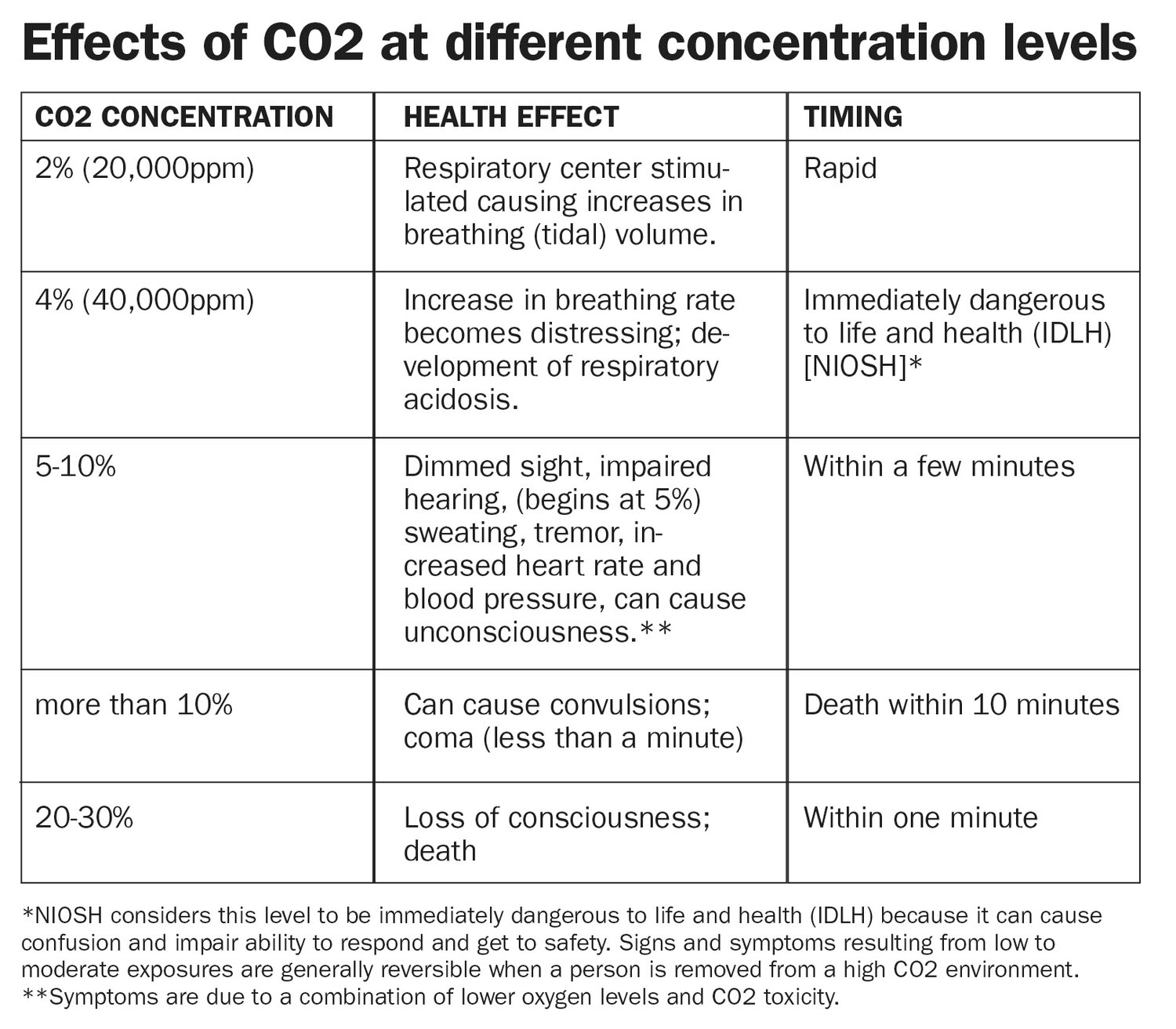
The table below provides an indication of the potential effects of a CO₂ rupture plume. As reported by Dr. David Schettler, a recognized expert, exposure to high concentrations of CO₂ can cause rapid loss of consciousness, convulsions, coma and death within minutes. During a rupture, concentrations exceeding 10% could persist near the release site until the line is shut down, with dangerous ground level concentrations spreading along the plume’s path. The key unknown is how long dangerous concentrations would persist.
PHMSA’s report on the 2020 Satartia, Miss., CO₂ pipeline rupture illustrates this risk. “Air monitoring conducted about one mile from the rupture site three hours after the accident recorded outdoor concentrations up to 26,000 ppm and indoor concentrations up to 28,000 ppm.” These lingering levels are particularly concerning given that “shelter in place” is the response recommended by Summit. The Satartia rupture traveled 1.5 miles, released 1.3 million gallons of CO₂, sent 45 people to hospitals, and forced the evacuation of approximately 200 residents.
It is important to emphasize that a two mile EPZ does not mean CO₂ will always travel that distance. It is a conservative planning assumption intended to protect public safety and provide notification, preparedness and clear emergency guidance under worst case conditions. Unfortunately, industry lobbying blocked these basic protections.
Landowners have the right to evaluate risks and benefits for themselves. However, when those risks extend beyond property boundaries and affect entire communities, the issue becomes one of public interest. The consequences of a pipeline rupture do not stop at property lines. Adjacent landowners bear risk without consent, and their property values may be affected regardless of their position on the project.
While approximately 75% of landowners along the 29.3 mile Cherokee County route have signed voluntary easements, it is unclear how many were fully informed of the potential risks involved.


Comments
No comments on this item Please log in to comment by clicking here